
Infertility no longer a “choice” for women
Posted on November 22, 2010 .
By Satoko Nagaoki, associate professor.
Reproduction rights, Gender and Women`s Studies
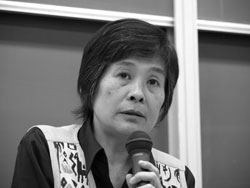 The Feminist International Network of Resistance to Reproductive and Genetic Engineering Resistance(Finrrage), was started in 1985 by a small group of women from all over the world. They made pregnancy a choice for women and I was invited as one of the participants. In 1991, I became one of the founding members of the Japanese organization。Our concept was to build a infertile women’s self-help group, name of “The friends of Finrrage”. (more…)
Small energy projects empowers women at the grass-root level
Posted on November 9, 2010 .
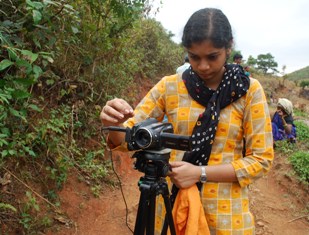
by Karuna D’Souza
Community Radio Trainer
Laya, Vanantharam
Addateegala, East Godavari District
Andhra Pradesh - 533 428
I was introduced to Climate Change in 1993. At that time I was 7 years old. Climate change meant that my mother would get to travel to different countries and return with something nice. She still travels to different countries following the Conference of Parties (COP) but now returns with information and valuable reports. And also of couse, something nice.
Justice to the “comfort women” survivors
Posted on October 22, 2010 .
By Mina Watanabe
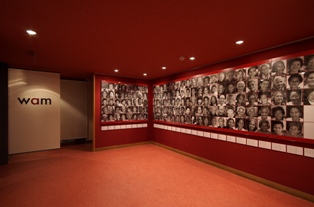
Women’s Active Museum (WAM) celebrated its 5th anniversary in August 2010. It is a huge step for us and in the Japanese women’s movement to stop violence against women during conflict and in daily life. We are deeply committed to this cause and will continue our activities till we achieve our purpose. (more…)
Muslim women living in Southern Thailand want peace
Posted on October 18, 2010 .
By Soraya Jamjuree
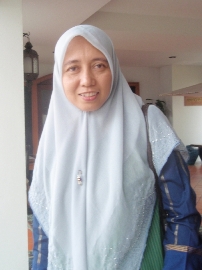 It is a great pleasure to write about our visions of peace for this blog site. I wear two hats—one as director of Friends of the Victimized Families Groups and also I work as a researcher on peace. Both these activities are under the auspices of the Prince of Songla University in Pattani. Peace for women, including Muslim women, living in conflict area means being able to live without harassment. They want to feel safe and want their families to be treated with respect. (more…)
Lobbying for Dual Custody
Posted on September 21, 2010 .
By Masako Suzuki
 We married in April 1986 and lived in Japan for five years. I worked, holding workshops and exhibitions of my fabric dye products and running clothing import business. In fact, I earned about three times what my husband did at first even though his income grew bigger later. In 1991 we decided to try to setup a business in Canada and eventually emigrate and so I quit my own job so to go with him and help him be successful. We moved to Canada in October 1992 and bought a house. (more…)
Burning Maputo
Posted on September 8, 2010 .
a testimony by Mercedes Sayagues*
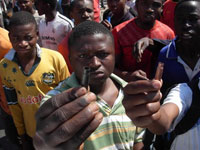
I was 50 meters away when the bullet hit Helio Ruite, slicing a chunk of his skull. Helio was 12 years old and heading home when he was caught between rioters and police on Acordos de Lusaka avenue in Maputo. He died on the spot, one among a dozen killed today. (more…)
Indian Women’s Rights to Safe Toilets
Posted on September 6, 2010 .
By Karen Ma
author/gender researcher
 Access to toilets for us who are raised in the developed world is a given. But in India’s case, a severe shortage of clean and safe toilets is not only affecting the health of its women, but directly hampering efforts to empower them. (more…)
Using art to change the world
Posted on August 24, 2010 .
By Naoko Sakokawa,
Photographer and author
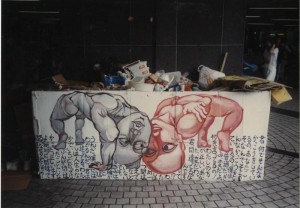 As a child I lived on a beautiful island called Tanegashima, or flower seed island, which is located close to the south most part of the Kyushu island. I was brought up there with lots of other relatives and led a serene and happy childhood even though my parents worked hard as farmers and we were economically not as rich as people in the big cities in Japan. (more…)
¿Femicidio, feminicidio? El genocidio necesita un nombre en América Latina
Posted on August 16, 2010 .
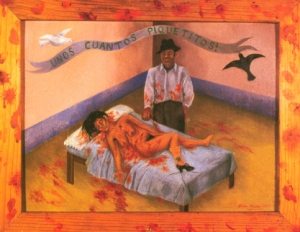 Por Diana Cariboni
Mi pregunta fue por qué en algunos países se llama femicidio y en otros feminicidio al asesinato de mujeres por razón de su sexo. Las feministas reunidas en San Salvador, en un taller organizado por el Comité de América Latina y el Caribe para la Defensa de los Derechos de la Mujer (Cladem), me mostraron que no era cuestión de una palabra u otra, sino una polémica no zanjada.
A female”hibakusha” speaks out
Posted on August 9, 2010 .
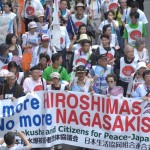
peace parade. New York. May 2010
by Toshiko Hamamako
Thank you for asking me to write about myself. I am happy to share my experiences.
Actually, it is only recently that I have begun to talk about my life as an atomic bomb survivor from Nagasaki. I am now 66 years old but I got the courage to talk to others only about two years ago. Till then I have kept the fact that I am an atomic bomb survivor just within my family. (more…)
